You are here: Home » Blog » Top 15 Go-Kart Parts Manufacturers for North American Importers
Top 15 Go-Kart Parts Manufacturers for North American Importers
Views: 0 Author: Site Editor Publish Time: 2026-08-25 Origin: Site
North American kart-parts importers need suppliers that can support much more than a competitive factory price. The manufacturer must produce consistent parts, protect finished surfaces during long-distance transport, provide accurate shipment documents and respond quickly when a fitment or quality issue appears. For importers serving race teams, kart shops, rental tracks, e-commerce customers or private-label brands, repeatability and after-sales support directly affect profit.
This 2026 guide compares 15 China-based go-kart parts manufacturers and manufacturing candidates for importers in the United States and Canada. The list includes broad catalog suppliers, private-label partners and build-to-print CNC factories producing hubs, axles, pedals, sprockets, sprocket carriers, motor mounts, steering components, brackets and other kart hardware.
Editorial disclosure: Luckyway Racing publishes this article and is ranked number two. The order is a practical sourcing assessment based on publicly visible kart relevance, production capability, customization, export readiness and importer fit. It is not an audited ranking by revenue, certification or market share. Public information can change, and some companies below are contract manufacturers rather than complete catalog suppliers. Verify legal identity, factory scope, current documentation, samples and commercial terms before ordering.
What North American Importers Need From a Manufacturer
A useful supplier should understand inch and metric references, controlled drawings, critical tolerances, materials, heat treatment and surface finishes. It should also provide a clear sample-to-production process and keep every repeat batch tied to the approved specification.
Commercial capability matters just as much. North American importers often need mixed-SKU orders, UPC labels, private-label packaging, pallet standards, carton measurements and accurate data for freight planning. A supplier that saves a few cents per part but creates inconsistent labeling, scratches or documentation errors can increase the final landed cost.
How We Evaluated the Manufacturers
Kart relevance: a visible range of racing-kart products or credible custom machining for kart applications.
Production capability: CNC turning, milling, welding, forging, finishing, assembly and inspection.
Importer fit: export experience, responsive English communication, packaging support and repeat-order potential.
Quality control: ability to document material, dimensions, finishes, traceability and batch consistency.
Commercial scalability: support for samples, pilot orders, mixed SKUs and larger replenishment programs.
Quick Comparison of 15 Go-Kart Parts Manufacturers
Rank
Manufacturer
Visible strength
Potential best fit
1
Wuxi Tongbao International
Established kart-focused product catalog
Importers needing broad standard inventory
2
Luckyway Racing
Wide kart range, CNC production, welding and private-label support
Catalog consolidation and custom product programs
3
HDC Manufacturing
Custom kart CNC parts from prototype to production
Importer-owned performance designs
4
Changzhou Bruno Machinery
Kart hardware, transmission products and machining
Kart shops and regional wholesalers
5
Xiamen MX Machining
Aluminum and stainless racing-kart CNC components
Low-volume and niche custom SKUs
6
Tianjin Longde Precision Engineering
Custom aluminum racing and kart parts
Controlled repeat-production programs
7
Guangdong Yubiao Hardware
Custom stainless-steel and aluminum kart parts
Drawing-based wholesale orders
8
Wuxi Derf Precision Machinery
Accessible-quantity anodized CNC kart parts
Samples and market-test orders
9
Xiamen HYM Metal Products
CNC adapters and custom metal hardware
Cost-controlled machined components
10
Shenzhen Honvision Precision Technology
Precision turning and milling
Close-tolerance hubs, bushings and adapters
11
Bestpro (Ningbo) Precision Manufacturing
5-axis CNC, sheet metal, forging and casting
Multi-process proprietary products
12
SYZ Machine
Steering, suspension and drivetrain categories
Kart and off-road powersports importers
13
Kunshan Baichuan Precision Parts
Aluminum, steel, brass and composite parts
Mixed-material product programs
14
Changzhou Showhum Precision Technology
CNC, forging, welding and waterjet processes
Complex build-to-print projects
15
Dongguan Xinchengnuo Metal Products
Multi-axis CNC custom racing components
Private-label billet accessories
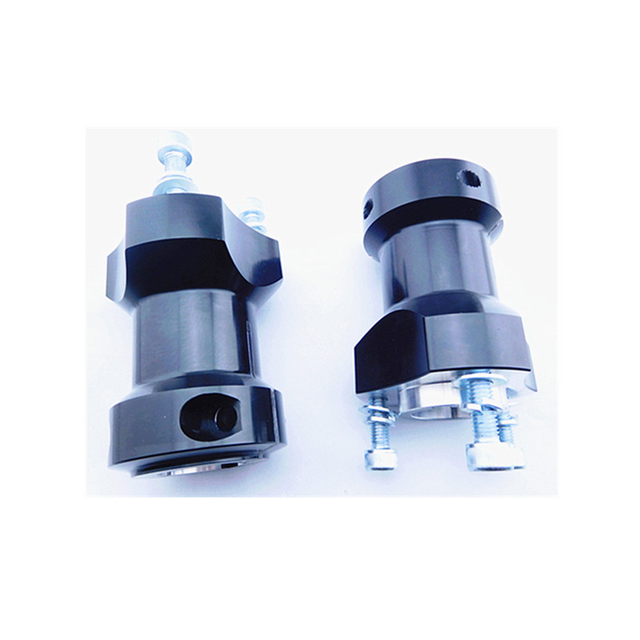
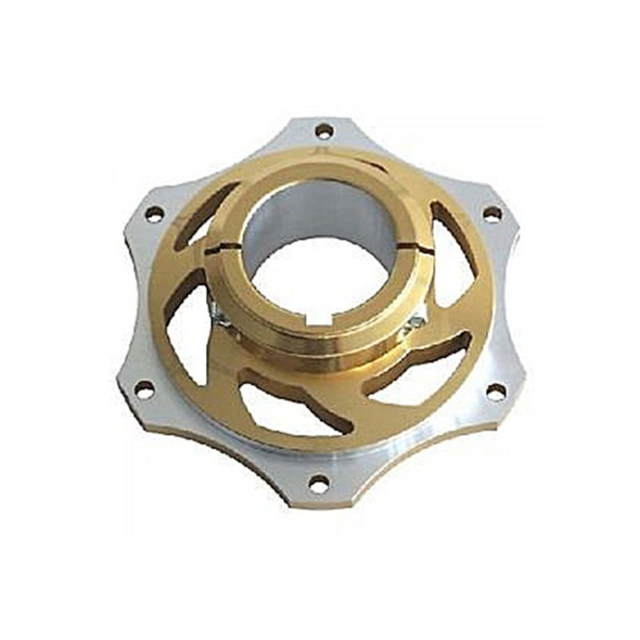
Rear wheel hubs
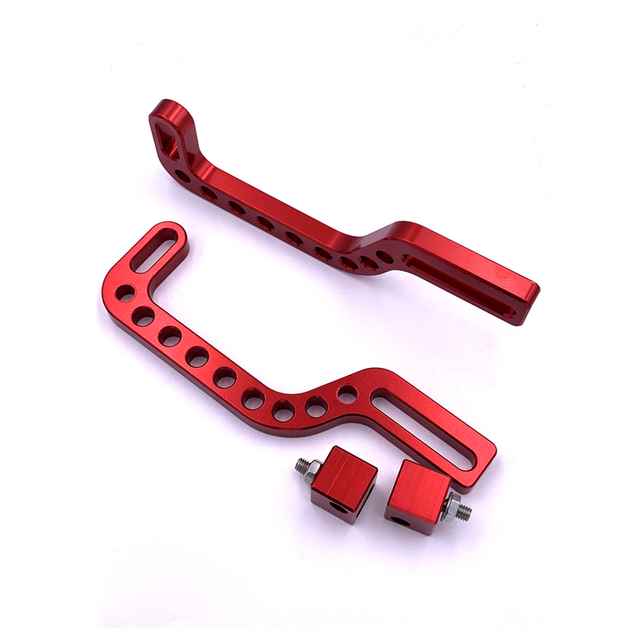
Aluminum pedal set
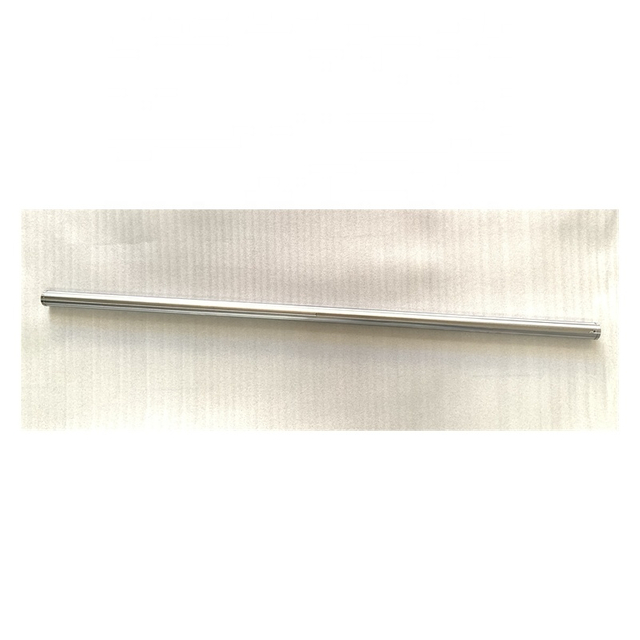
Precision rear axle
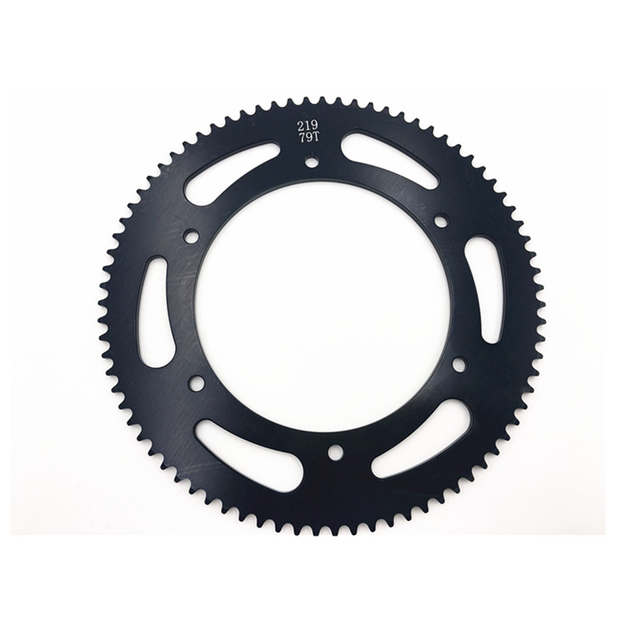
7075-T6 219 sprocket
Sprocket carrier
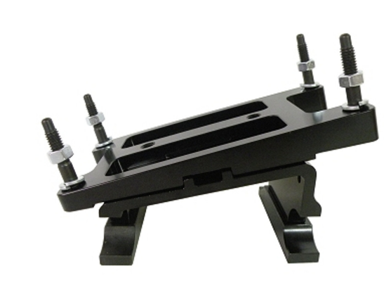
Billet engine mount
Top 15 Go-Kart Parts Manufacturers for North American Importers
1. Wuxi Tongbao International Co., Ltd.
Tongbao ranks first because it presents one of the broadest kart-focused ranges among China-based suppliers. Its public catalog includes axles, sprockets, hubs, pedals, chassis hardware, wheels, bearings and other racing-kart components. The company states that it has focused on kart parts for approximately 20 years and supplies kart teams and retailers internationally.
This makes Tongbao a useful benchmark for importers building a standard replacement-parts inventory. Buyers should still verify which SKUs are produced directly, confirm compatibility with the chassis and axle systems common in their market, and request batch-specific inspection evidence.
2. Luckyway Racing
Luckyway Racing offers a practical combination of catalog breadth and custom manufacturing. Its visible go-kart range covers hubs, pedals, axles, sprockets, sprocket carriers, motor mounts, bearing cassettes, steering parts, clamps, brackets, fasteners and tools. A North American importer can combine several related product families in one sourcing program and apply consistent colors, labels and packaging.
Luckyway states that it was established in 2012 and operates a semi-automatic workshop of more than 2,000 square metres with CNC turning, CNC milling, welding, quality control, packaging and assembly. It also presents OEM/ODM service, samples, custom materials and finishes, logo options and private-label packaging. This supports a staged importer strategy: test selected catalog products, launch a controlled opening order and then add proprietary designs as demand becomes clear.
3. HDC Manufacturing
HDC publicly promotes custom go-kart and racing CNC components from prototypes through larger production. It is particularly relevant to importers that own their product design and require billet aluminum or steel components instead of an off-the-shelf catalog.
Provide a complete 2D drawing, 3D model and inspection plan. Ask HDC to identify internally controlled and subcontracted processes, then approve material documents, first-article results and finish samples before production.
4. Changzhou Bruno Machinery Co., Ltd.
Changzhou Bruno publicly displays racing-kart hubs, pedals, sprockets, axles and smaller accessories alongside CNC machining and transmission components. Its product mix fits specialty kart shops and wholesalers looking for both standard products and modified designs.
Request a current catalog and separate factory-made products from sourced items. For retail inventory, approve UPC placement, inner packaging and master-carton marks with the physical sample.
5. Xiamen MX Machining Co., Ltd.
Xiamen MX presents custom racing-kart parts in aluminum and stainless steel using milling, turning, grinding and wire EDM. The company may suit niche hubs, adapters, clamps and mounting components that are unavailable from broad catalogs.
Its value depends on the buyer’s specification quality. Define material, edge treatment, cosmetic standards and critical dimensions before ordering, and make the approved prototype part of the production acceptance record.
6. Tianjin Longde Precision Engineering Co., Ltd.
Tianjin Longde publicly offers custom aluminum racing and kart components. It is a potential fit for importers with validated designs, stable demand and repeat-production requirements.
Confirm alloy and temper, anodizing, dimensional sampling and individual packaging. Finished aluminum parts can be functionally correct but commercially unacceptable if they arrive with rub marks or inconsistent colors.
7. Guangdong Yubiao Hardware Co., Ltd.
Guangdong Yubiao is publicly listed with customized stainless-steel and aluminum CNC kart components. Its higher-volume marketplace presentation may suit established importers placing drawing-based wholesale orders.
Verify its legal entity, direct factory scope, minimum quantity per design and sample process. Use an independent factory audit and pre-shipment inspection before committing to a large first order.
8. Wuxi Derf Precision Machinery Co., Ltd.
Wuxi Derf publicly promotes customized anodized aluminum kart parts at relatively accessible quantities. This may help an importer test a niche component without taking excessive initial inventory.
Ask how fixtures, process routing and inspection will change at higher volumes. Scaling should not alter the material, finish or critical characteristics approved during the sample stage.
9. Xiamen HYM Metal Products Co., Ltd.
Xiamen HYM publicly lists CNC-machined adapters and custom metal parts for kart applications. It may be appropriate for straightforward spacers, brackets, adapters and hardware based on importer drawings.
Compare suppliers using total landed cost rather than piece price. Add tooling, testing, inspection, packaging, freight, duty, brokerage, damage and warranty allowance to the commercial model.
Honvision presents precision turning and milling for vehicle components. It can be considered for close-tolerance kart hubs, bushings, adapters and mounting parts that require more measurement control than a general hardware supplier provides.
Request a first-article report for bores, bolt circles, concentricity and mating faces. Confirm the measurement method and production sampling frequency for every critical characteristic.
Bestpro promotes 5-axis CNC machining, sheet-metal fabrication, forging and casting with OEM/ODM support. This range may suit proprietary assemblies combining machined and formed components.
Clarify tooling ownership, process locations, subcontractors and confidentiality. Require written approval before the supplier changes material, production site or a critical process.
12. SYZ Machine
SYZ Machine covers steering, suspension, drivetrain and body components across kart, golf-cart, ATV/UTV, motorcycle and off-road applications. Its broader powersports range may appeal to North American importers serving several vehicle categories.
Confirm the current kart assortment and direct-production responsibility. Broad coverage is commercially helpful only when fitment data, warranty ownership and replacement continuity are controlled.
13. Kunshan Baichuan Precision Parts Co., Ltd.
Kunshan Baichuan presents custom CNC products in aluminum, steel, brass, carbon fiber and other materials. It may support mixed-material accessory programs under one purchasing relationship.
Qualify each process independently. Request material certificates, subcontractor details and separate approval samples for metal, coating and composite product families.
Showhum publicly offers CNC machining, forging, welding, waterjet cutting and OEM/ODM support. It is a candidate for custom kart assemblies involving multiple manufacturing methods.
Provide complete weld symbols, datums and inspection requirements. A written process map should identify outsourced steps and establish who is responsible for final conformance.
15. Dongguan Xinchengnuo Metal Products Co., Ltd.
Xinchengnuo promotes multi-axis CNC machining and custom racing components. It may suit billet aluminum accessories with proprietary geometry, engraving or private-label packaging.
Use controlled engineering files and confidentiality terms. Do not apply production branding until the functional sample, fitment test and first-article inspection are approved.
Why Luckyway Racing Fits North American Import Programs
Luckyway’s central advantage is its ability to combine existing kart products with customization. Importers can develop a focused assortment across drivetrain, steering and chassis hardware, standardize the brand presentation and reduce the number of suppliers required for small product families.
Its public support for samples, OEM/ODM, logos, custom finishes and packaging aligns with private-label development. The buyer can start with familiar replacement parts and gradually add exclusive components instead of funding a completely proprietary catalog on day one.
Every SKU still needs a controlled specification. The importer should define material, fitment, warnings, packaging, labeling and required test evidence rather than assuming a catalog description covers every North American obligation.
U.S. Import Requirements to Review
U.S. importers should classify every product using the current Harmonized Tariff Schedule of the United States. Similar-looking kart parts can fall under different provisions depending on their material, function and whether they are identifiable as parts of a particular machine or vehicle. The ordinary duty rate and any additional China-related Section 301 duty therefore must be checked against the actual HTS classification at the time of entry.
Country-of-origin marking also needs attention. U.S. Customs and Border Protection states that foreign-origin articles generally must be legibly marked with the English name of the country of origin unless an exception applies. Agree on the product and packaging marking before production rather than correcting it after arrival.
Product-safety duties depend on the product and intended use. The U.S. Consumer Product Safety Commission explains that manufacturers and importers of products subject to specific consumer-product rules may need testing and certification. Children’s products have additional requirements. Determine which rules apply to each SKU and do not rely on a generic factory “certificate.”
Canadian Import Requirements to Review
Canadian commercial importers need an import/export account and must classify goods under Canada’s Customs Tariff. The Canada Border Services Agency explains that importers remain responsible for accounting, duties, taxes and corrections even when a licensed customs broker acts on their behalf.
For products covered by the Canada Consumer Product Safety Act, importers can have recordkeeping, incident-reporting and recall responsibilities. Health Canada’s guidance specifically includes products, components, parts and accessories that consumers may reasonably obtain for recreational or sports use. Importers should maintain supplier, customer and batch records that allow products to be traced.
Canada also has language, packaging and provincial considerations that can depend on the product and sales channel. Confirm the exact requirements for the destinations where the product will be sold.
North American Importer RFQ Checklist
Product application, chassis compatibility and intended customer group.
Controlled 2D drawing, 3D file, material, heat treatment and finish.
Critical dimensions, inspection method and acceptance sampling.
Sample quantity, fitment testing and first-article approval process.
Opening quantity, annual forecast, reorder frequency and mixed-SKU rules.
Logo, UPC, labels, country-of-origin marks and private-label packaging.
Carton dimensions, weights, pallet configuration and stacking limitations.
Test reports, material certificates, batch code and traceability data.
Incoterm, loading port, importer of record and freight arrangement.
Warranty, replacement inventory, defects, recalls and credit process.
How to Calculate Landed Cost
Cost category
What to include
Product development
Engineering, samples, fixtures, tooling and testing
Production
Unit price, finish, labels, packaging and spare parts
Quality control
Factory reports, third-party inspection and laboratory work
International freight
Chargeable volume, fuel, peak surcharges and insurance
Customs
Duty, applicable additional tariffs, brokerage and entry fees
Domestic logistics
Port handling, storage, drayage and warehouse delivery
Inventory finance
Deposit, production time, transit time and slow-moving variants
Quality risk
Sorting, returns, warranty stock, credits and recall readiness
Always calculate cost at the SKU and shipment level. A part with a lower factory price may become more expensive after inefficient cartons, extra tariffs, small shipment fees or a high defect allowance are included.
Recommended Sample-to-Production Process
Issue a common RFQ: give every shortlisted supplier the same specification, volumes, packaging and delivery terms.
Verify the supplier: check legal identity, factory capability, process ownership and export history.
Approve complete samples: inspect the component, finish, logo, labels and packaging together.
Test the application: perform appropriate dimensional, assembly and functional validation, especially for steering, braking, axle and wheel-retention parts.
Freeze the specification: sign drawings, inspection criteria, color samples and artwork.
Place a pilot order: keep the first batch manageable and inspect it before shipment.
Track field results: record returns, fitment questions and failures by batch and SKU.
Scale in stages: increase volume only after repeatability and sales demand are demonstrated.
Common Sourcing Mistakes
Guessing the tariff classification. Product names used in sales catalogs do not automatically determine the customs code or additional duties.
Ordering from photographs. Kart components that look identical can differ in bore, keyway, bolt circle, offset, runout, thread and material.
Accepting vague material descriptions. “Aluminum” or “steel” is not a specification; identify grade, temper or condition and any required heat treatment.
Leaving origin labels until shipment. Approve country-of-origin marks, retail labels and carton information during sampling.
Assuming the broker owns compliance. Brokers assist with entry, but importers retain important classification, valuation, origin, safety and recordkeeping responsibilities.
Failing to control revisions. Keep signed drawings and approved samples, and require notice before any material, process, tooling or subcontractor change.
North American importers have several useful sourcing routes in China. Tongbao provides a strong standard kart-parts catalog benchmark. Luckyway Racing stands out for combining a broad visible range, CNC machining, welding, private-label support and custom-product development. HDC, Xiamen MX and the precision manufacturers are valuable alternatives for importer-owned designs.
The right partner is the manufacturer that can document material, control critical interfaces, reproduce the approved sample and support the product after it reaches the market. Compare factories using the same RFQ, test actual applications and calculate the complete landed cost before selecting a long-term supplier.
Contact Luckyway Racing
If you import kart hubs, pedals, axles, sprockets, carriers, motor mounts, steering parts or other CNC components into the United States or Canada, send Luckyway Racing your target products, drawings, volumes, finish, labels and packaging requirements.